
Customer Support
What is DNS and A, CNAME and MX records?
The Domain Name System (DNS) is a hierarchical database that translates numerical IP addresses into readable domain names. This system enables users to access websites using familiar names like www.papaki.com instead of numeric IPs such as 185.4.133.161.
You can manage your domain's DNS records easily through your Papaki control panel. While no advanced technical knowledge is required, keep in mind that changes to DNS records can affect your services and may disconnect your domain from its hosting package. For this reason, any changes or additions should be made with care.
Important: To continue using Papaki's free services, you must retain the default Papaki DNS records. If they are modified, the services will be deactivated or deleted within 7 days.
If your domain's active DNS zone is managed through your Plesk hosting package, follow the instructions described here.
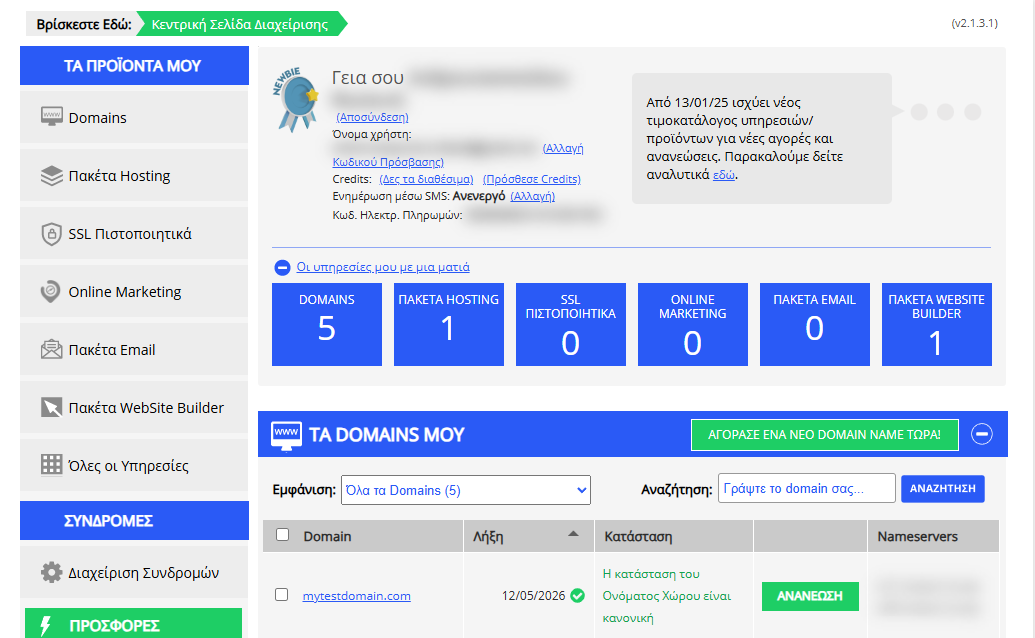
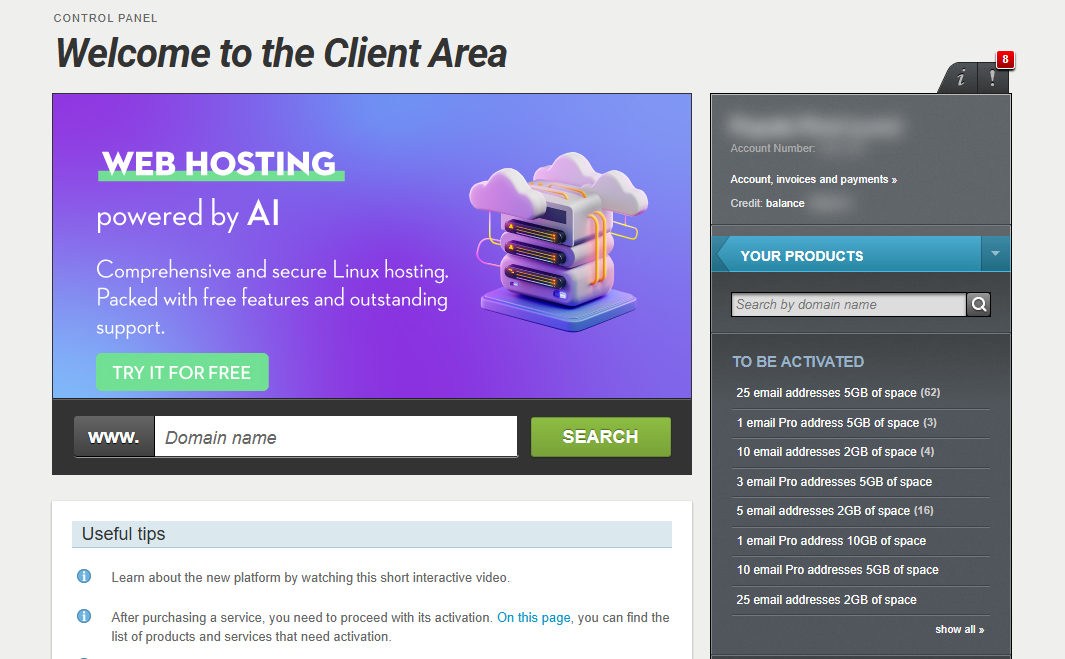
[Papaki 2.0]
Managing DNS Records
To manage your domain’s DNS records using Papaki’s free DNS service, follow these steps:
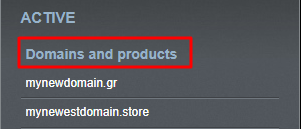
- From the right-hand menu under Domains & Products, select the domain you wish to manage.
- Go to Domain & DNS, then click on DNS Management.
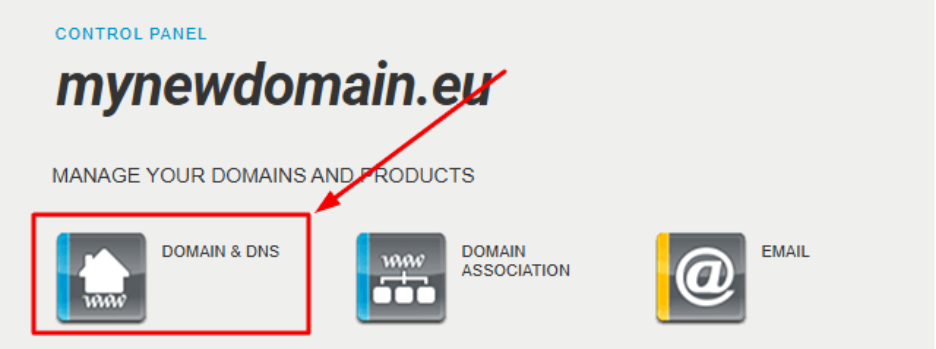
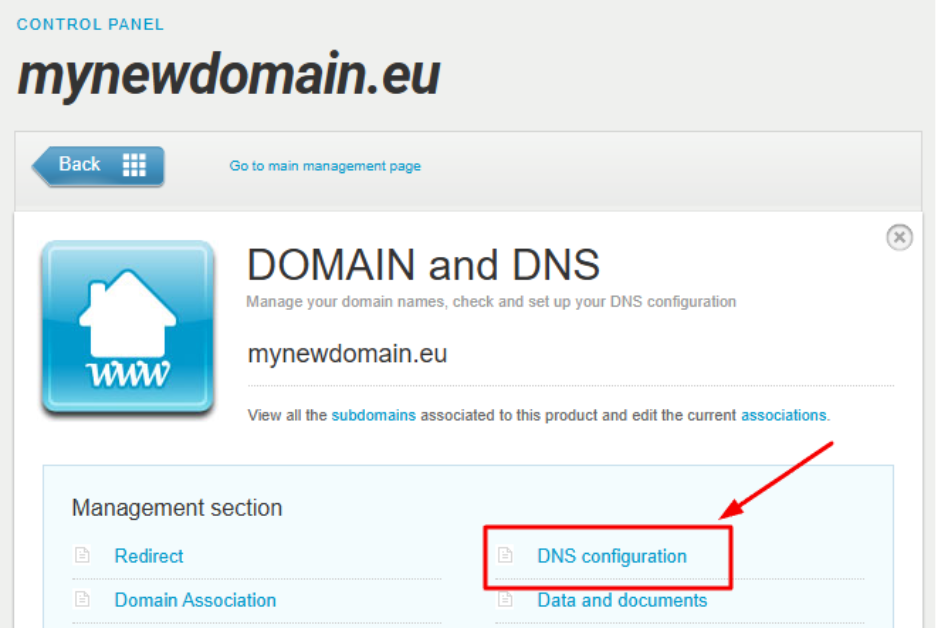
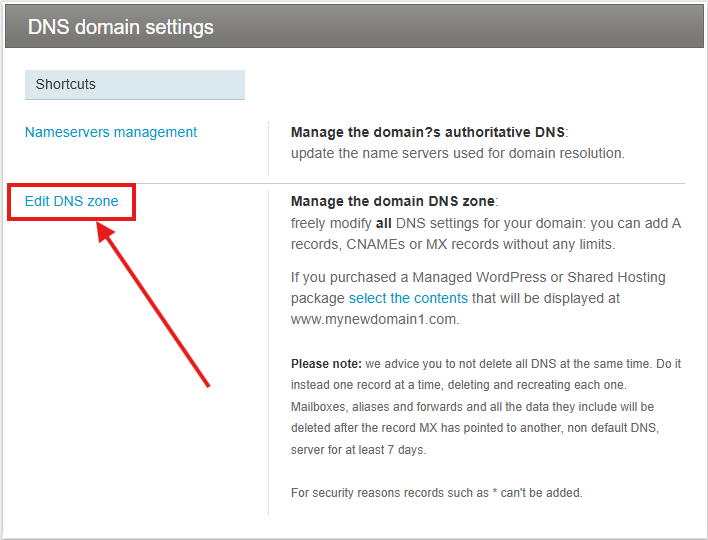
- Select Edit DNS zone.
- You can now add new records, or delete an existing one using the Delete option.
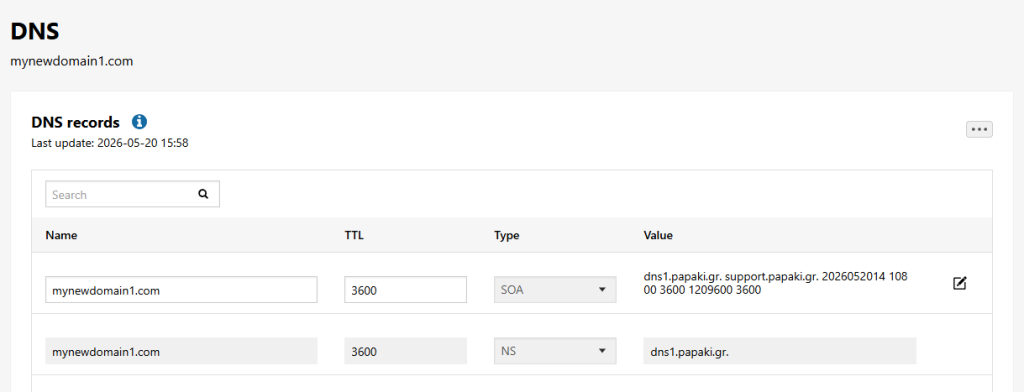
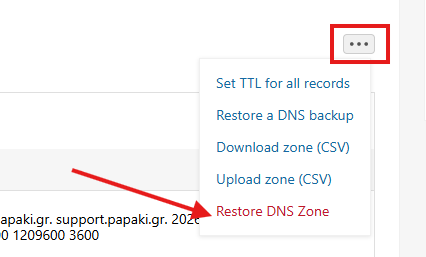
- To restore the original records, click on Restore DNS Zone.
A Records
An A record (Address Record) maps a domain name to its corresponding IPv4 address. For example, the A record of papaki.com may point to 185.4.133.161.
To add an A Record:
Click Add A Record, then:
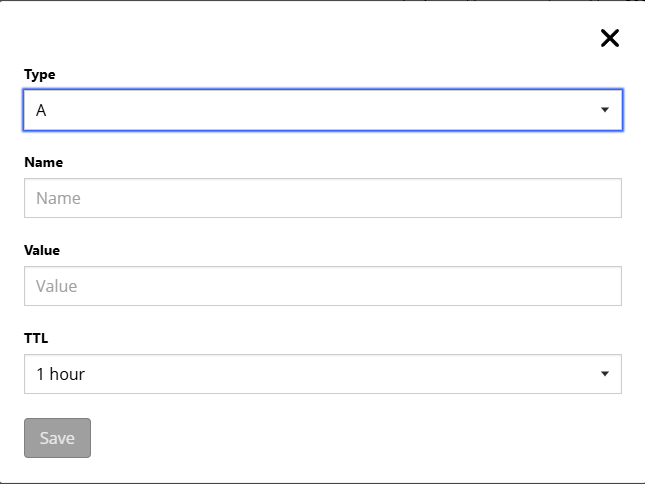
- Click +Add to create a new record and then choose A from the dropdown menu
- Enter the Name (leave blank for root domain).
- Enter the IP Address in Value. It should follow the format XXX.XXX.XXX.XXX, with each segment ranging from 0 to 254, for example, 185.4.133.161.
- Choose TTL or leave the default 1 hour
- Click Save to save.
Note:
- If the instructions you received from your provider state that you need to enter the @ symbol before your domain name when creating the record, you should omit it.
- You can have multiple A records pointing to the same IP address. If you’re setting up a subdomain like test.mydomain.gr, you must add an A record with:
Hostname: test
IP Address: (same as the main domain) - Changes may take up to 15 minutes or what you set in TTL.
- Deleting an A record may disrupt services such as website access or email functionality.
CNAME Records
A CNAME record (Canonical Name) maps an alias name to the true (canonical) domain name. For instance, www.papaki.com could be a CNAME for papaki.com.
To add a CNAME Record:
Click Add CNAME Record:
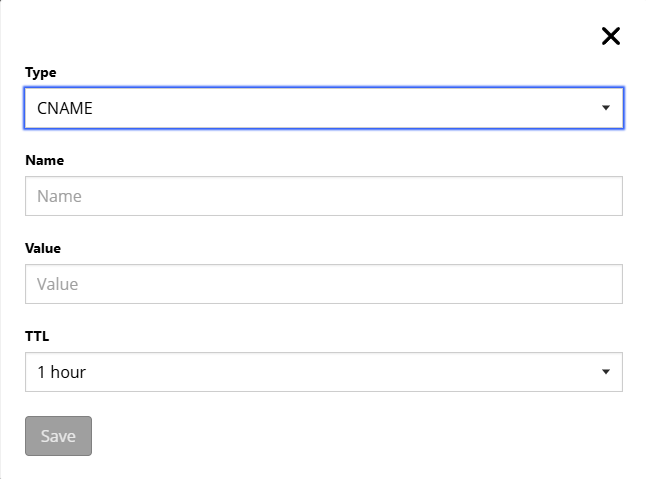
- Click +Add to create a new record and then choose CNAME from the dropdown menu
- Enter the Name (optional for root domain).
- Select the target A record or type the canonical name in Value.
- Choose TTL or leave the default 1 hour
- Click Save to save.
Note:
- If the instructions you received from your provider state that you need to enter the @ symbol before your domain name when creating the record, you should omit it.
- A common use is redirecting www.example.com to example.com.
- Changes may take up to 15 minutes or what you set in TTL.
- Deleting a CNAME record may disrupt access to services such as your website.
MX Records
An MX record (Mail Exchanger) directs email messages to the appropriate mail server for your domain.
To add an MX Record:
Click Add MX Record:
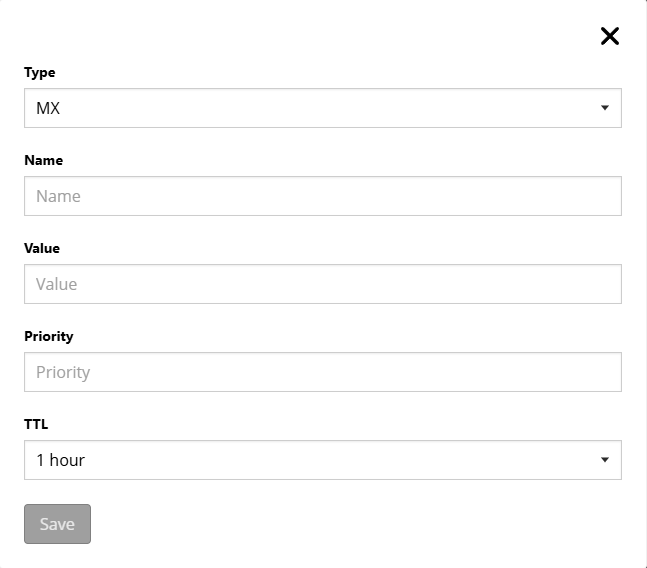
- Enter the Name (optional for root domain).
- Enter the mail server hostname or IPn in Value.
- Set the Priority (lower value = higher priority).
- Choose TTL or leave the default 1 hour
- Click Save to save.
Note:
- If the instructions you received from your provider state that you need to enter the @ symbol before your domain name when creating the record, you should omit it.
- You can use multiple MX records with different priorities for email redundancy.
- Avoid using MX records from multiple providers simultaneously, as this can break your mail flow.
- Changes may take up to 15 minutes or what you set in TTL.
- If you’re using Papaki’s free email service, any MX change will delete your email address and its contents after 7 days. Be sure to back up your emails before making changes.
[Papaki 1.0]
You can manage DNS Records through the Server's management environment
- Log in to your Papaki account.
Forgot your password? See here how to recover it. If it's your first login attempt to the new Papaki panel, please read more here
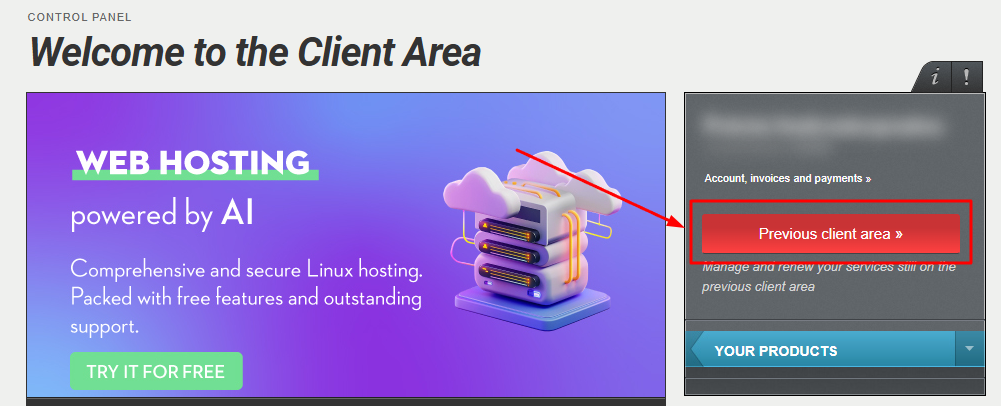
- Click the red button Previous client area » on the right side of the control panel to access the old Papaki panel.
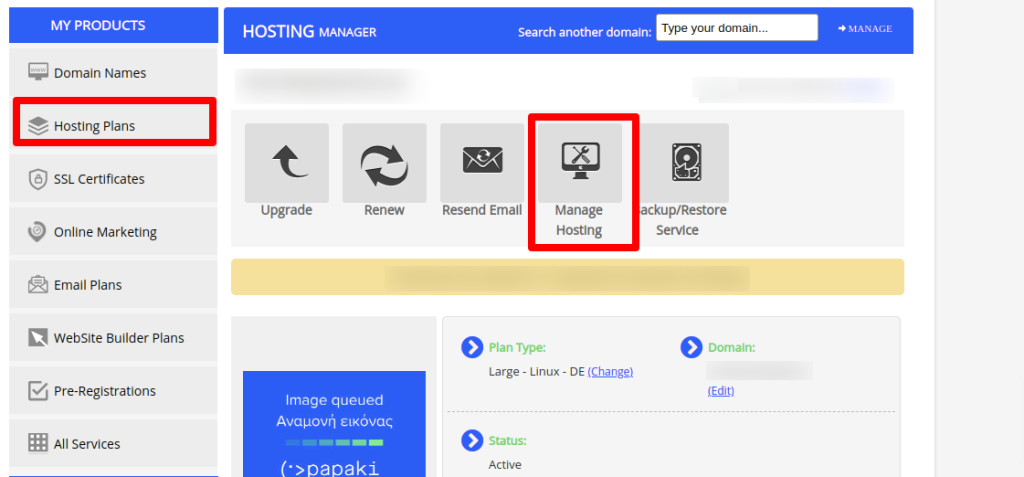
- Select the package you want. Click on "Manage Hosting" to connect to the Plesk of the package you are interested in.
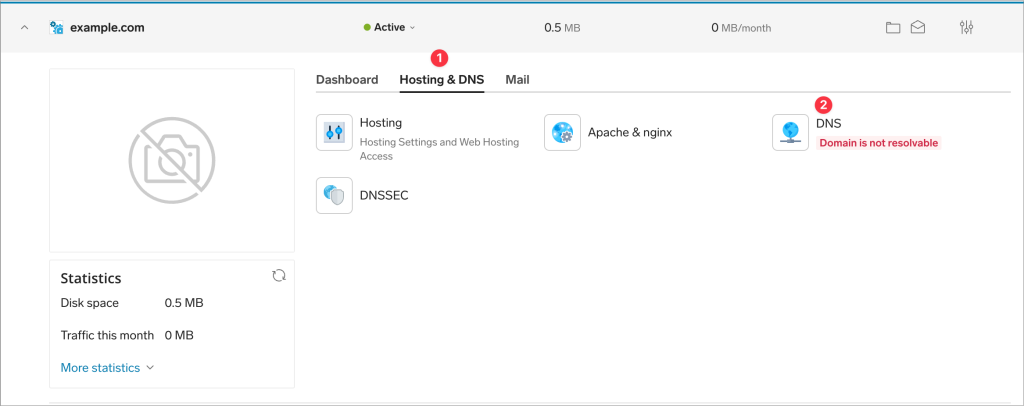
- On the Websites & Domains tab, select Hosting & DNS and then DNS
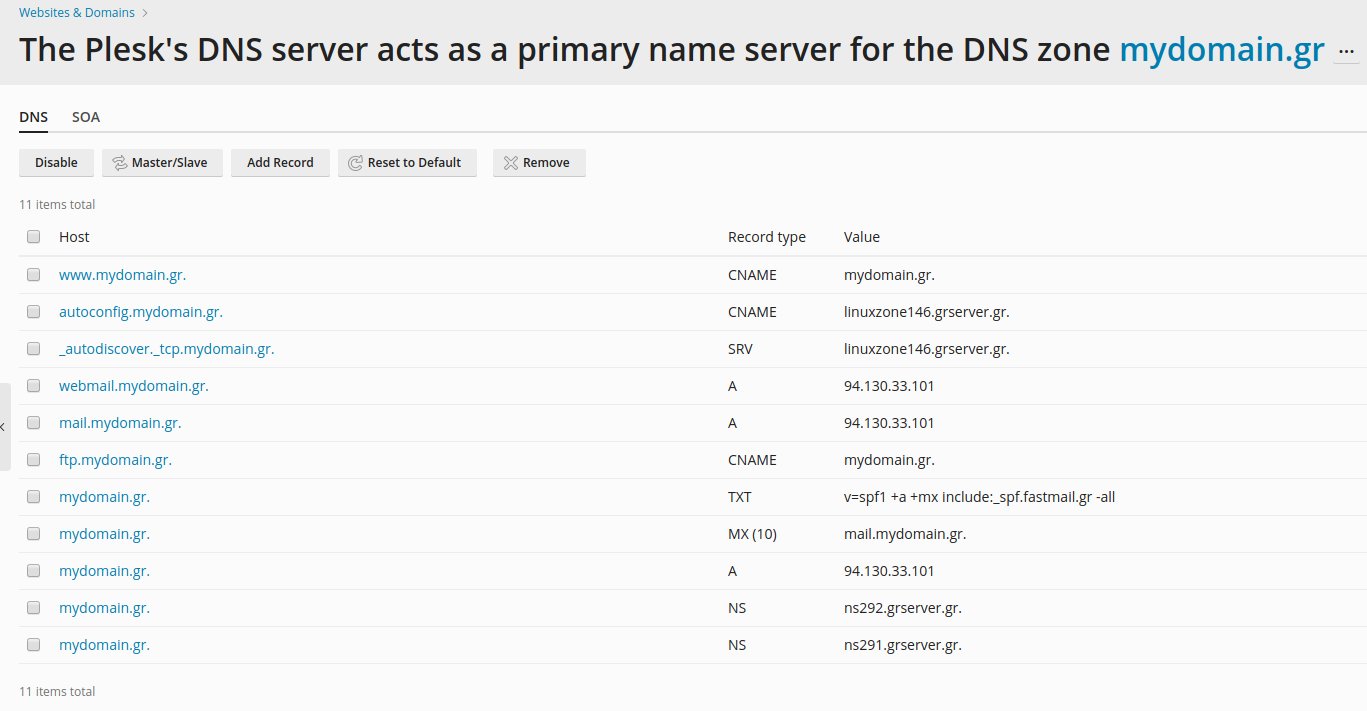
The A record (A record) or otherwise Address record defines which IP address corresponds to a domain name. What the A record does is translate the namespace into a numeric address. For example the A record of the domain name papaki.com is 185.4.133.161
The Cname record (Canonical Name record) associates the true canonical name with alias names used by the computer itself. For example the Cname record of papaki.com might be www.papaki.com
The MX record (Mail Exchanger Record) concerns only our mail service and allows us to redirect emails sent to our domain accounts to any mail server we want. For example the MX record of the domain name www.papaki.com is mail.papaki.com
5. The above records can be viewed and edited through Plesk's DNS Settings.
You haven't found what you are looking for?
Contact our experts, they will be happy to help!
Contact us