
Customer Support
How do I create the CSR in my Plesk Onyx Control Panel?
Before an SSL certificate can be issued, you must first generate a CSR (Certificate Signing Request) through Plesk.
A CSR is an encrypted request that contains information about your domain and organization and is used by the Certificate Authority to issue your SSL certificate.
Before You Begin
Make sure that:
- You have access to the Plesk Control Panel.
- You know the domain name for which the SSL certificate will be issued.
- You have a valid email address available.
- All information entered is written using Latin characters. Using non-Latin characters may cause the Certificate Authority to reject the request.
Important: When you generate a CSR, Plesk also creates the corresponding Private Key. The SSL certificate must be installed in the same environment where the CSR was generated.
Step 1: Log in to Plesk
Log in to Plesk using your credentials. Alternatively, you can access Plesk through your hosting account's Control Panel.

Step 2: Access SSL Certificate Management
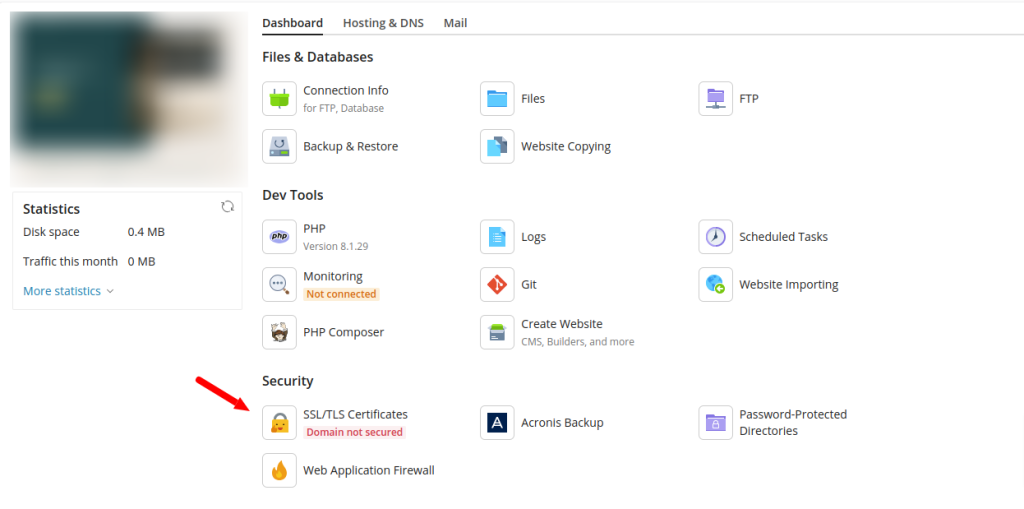
- Navigate to Websites & Domains and select SSL/TLS Certificates.
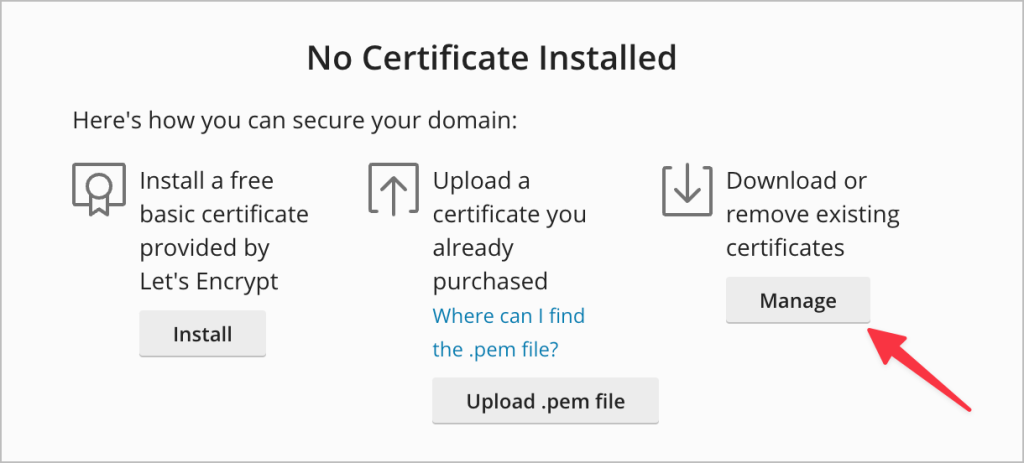
- Click Manage.
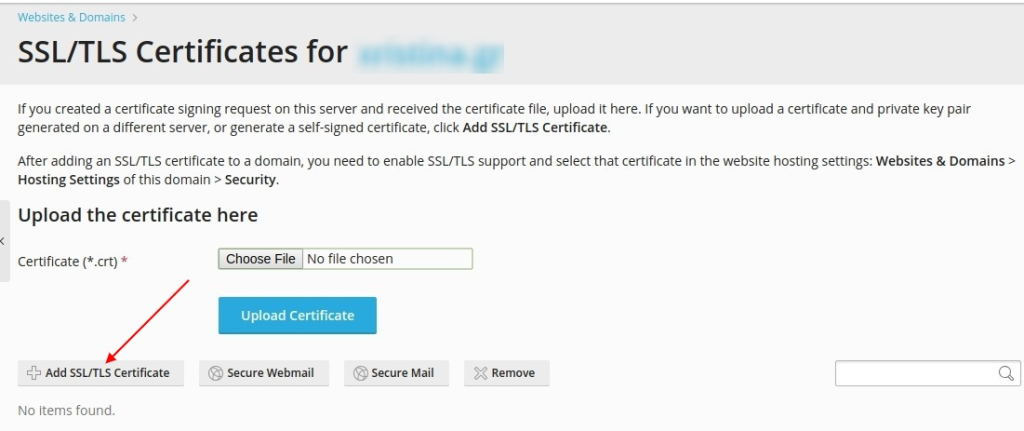
- Select Add SSL/TLS Certificate.
Step 3: Complete the Certificate Details
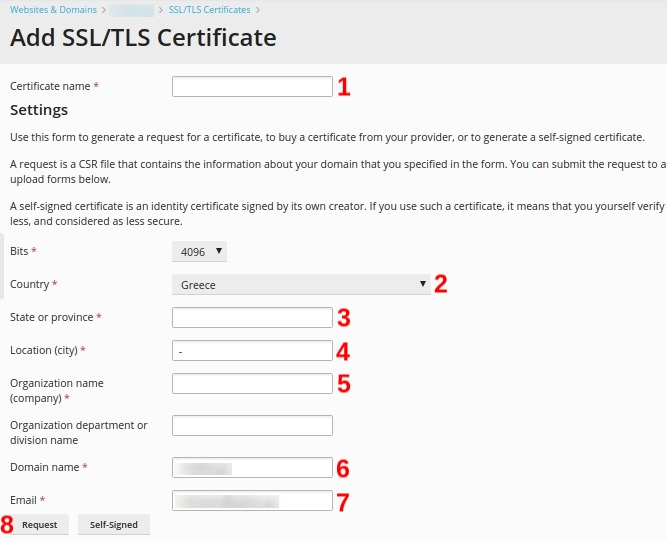
Fill in the following fields:
- No. 1 - Certificate Name: A descriptive name that will help you identify the certificate within Plesk.
- No. 2 - Country: Select your country.
- No. 3 - State or Province: Enter your state, province, or region. The value cannot exceed 64 characters.
- No. 4 - Location: Enter your city or locality. The value cannot exceed 64 characters.
- No. 5 - Organization Name (Company): Enter the name of the organization or company for which the certificate is being issued.
- No. 6 - Domain Name: Enter the domain name that the SSL certificate will protect. Examples:
example.comwww.example.com
- No. 7 - Email: Enter a valid email address.
- No. 8: Verify that all information entered is correct and accurate, as it will be used to generate your Private Key.
Click Request to generate both the Private Key and the Certificate Signing Request (CSR).
Important:
example.comandwww.example.comare considered different hostnames when issuing an SSL certificate. Make sure you enter the correct version, as it cannot be modified after the certificate has been issued.
Once the process is completed, the certificate request will be created and displayed on the next page.

Step 4: Copy the CSR
Once the certificate request has been created:
- Click the name of the certificate you created.
- Locate the CSR section.
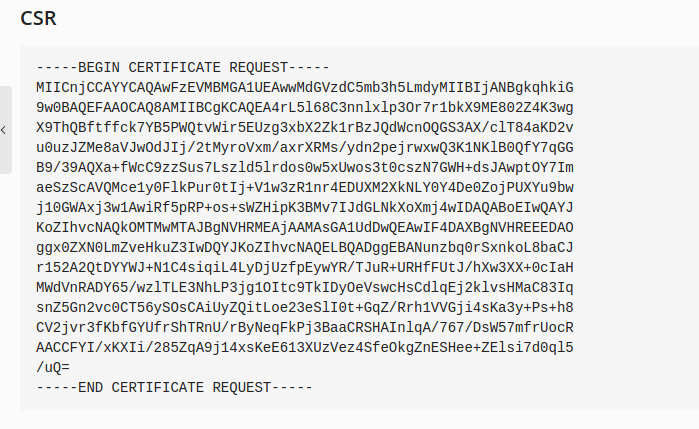
- Copy the entire contents, starting with:
-----BEGIN CERTIFICATE REQUEST-----
and ending with:
-----END CERTIFICATE REQUEST-----
The CSR will have a format similar to the example displayed in the guide.
What should I do after creating the CSR?
After copying the CSR:
- Use it during the issuance or reissuance process of your SSL certificate.
- Wait for the certificate issuance process to be completed.
- Once you receive the issued SSL certificate, install it on the same Plesk instance where the CSR was originally generated.
Helpful Tip
Keep the SSL certificate and its corresponding Private Key in the same hosting environment. If the Private Key is lost, or if you attempt to install the SSL certificate on a different server from the one where the CSR was generated, you may need to generate a new CSR and request a certificate reissue.
You haven't found what you are looking for?
Contact our experts, they will be happy to help!
Contact us